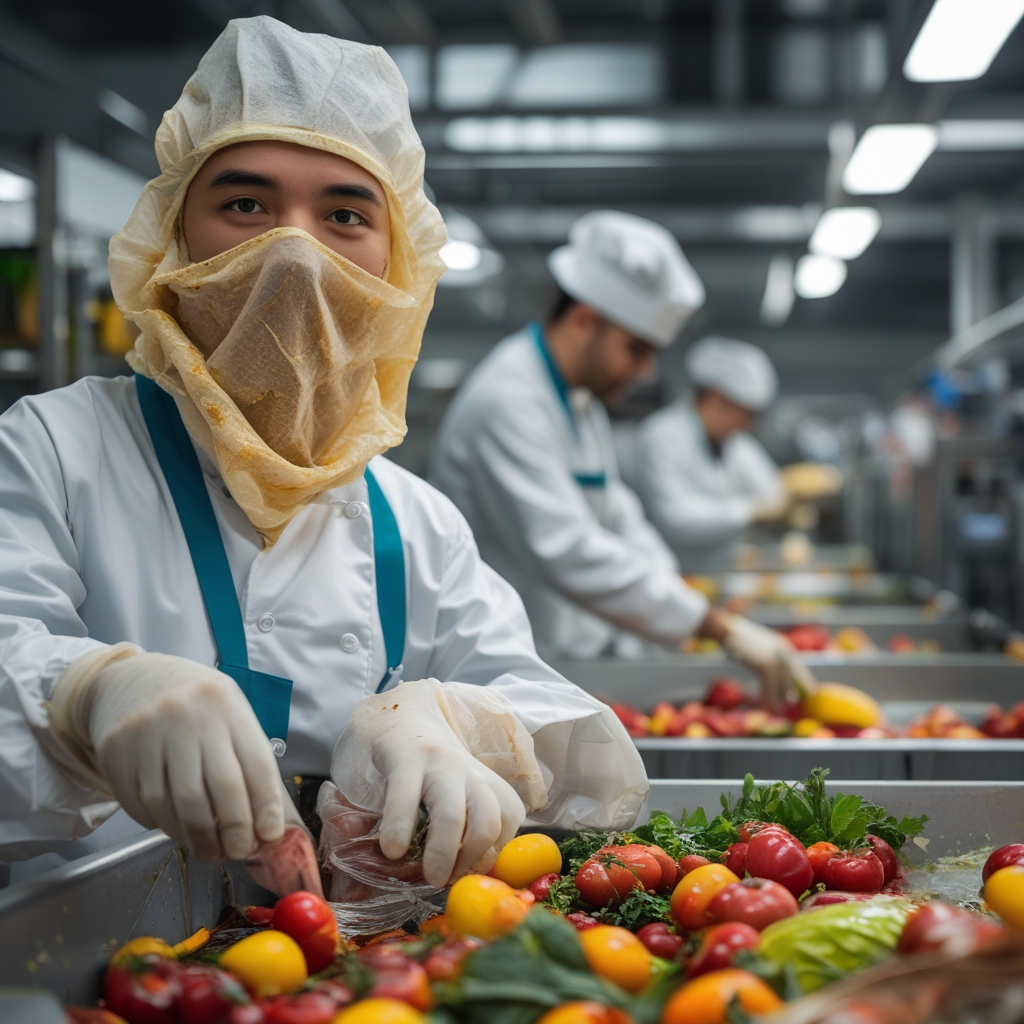
The food waste reduction market addresses the global challenge of 1.3 billion tons of food wasted annually (FAO), valued at $63.02 billion in 2023, projected to reach $113.1 billion by 2030 (CAGR 7.4%) (Grand View Research). Growth is driven by sustainability awareness, regulatory pressures, and economic incentives.
2. Market Segmentation
- By Solution:
- Waste Tracking & Analytics (e.g., Winnow, LeanPath)
- Redistribution Platforms (e.g., Too Good To Go, OLIO)
- Upcycling & Composting (e.g., Apeel Sciences, Re-Nuble)
- By Application:
- Retail, Food Service, Households, Production/Supply Chain
- By Region:
- Europe: Leader due to strict regulations (e.g., France’s 2016 anti-waste law).
- North America: Rapid growth via corporate initiatives (e.g., Walmart’s zero-waste pledge).
- Asia-Pacific: Fastest growth, driven by urbanization and government programs (e.g., Japan’s Food Recycling Law).
3. Key Players
- Tech Startups: Winnow (AI analytics), Imperfect Foods (ugly produce subscription).
- Corporates: Tesco (FareShare partnership), Starbucks (food donation programs).
- Non-Profits: ReFED, Feedback Global.
4. Drivers
- Regulatory Policies: EU Farm to Fork Strategy, U.S. Food Loss and Waste 2030 Champions.
- Consumer Demand: 72% of consumers prioritize sustainability (IBM, 2022).
- Economic Incentives: Retailers save $7 for every $1 invested in waste reduction (WRAP).
- SDG 12.3: UN goal to halve food waste by 2030.
5. Challenges
- Infrastructure Gaps: Limited cold storage in developing regions.
- Behavioral Barriers: Consumer preference for “perfect” produce.
- Supply Chain Complexity: Coordination among stakeholders.
6. Opportunities
- Tech Innovations: AI/ML for demand forecasting, blockchain for traceability.
- Circular Economy Models: Upcycled products (e.g., Toast Ale using surplus bread).
- Emerging Markets: Expansion in Asia-Pacific and Africa.
7. Technologies & Solutions
- Smart Packaging: Apeel’s edible coating extends shelf life.
- Anaerobic Digestion: Converts waste to energy (e.g., BioHiTech).
- Apps: Too Good To Go has saved 250+ million meals globally.
8. Case Studies
- Tesco & FareShare: Redirected 30,000+ tons of surplus food since 2016.
- Denmark: Reduced waste by 25% via consumer campaigns.
- Starbucks: Donated 18 million meals in the U.S. since 2020.
9. Future Outlook
- Regulatory Expansion: More countries adopting waste bans.
- Tech Adoption: Growth in AI and IoT for real-time waste tracking.
- Investment Surge: $2.3 billion in VC funding to food waste startups (2020–2023).
10. Conclusion
The food waste reduction market is pivotal for achieving climate goals and food security. Collaboration across governments, corporations, and consumers, alongside tech innovation, will drive progress. The sector’s growth reflects a shift toward circular economies and sustainable consumption, offering significant economic and environmental returns.
Competition Overview of the Food Waste Reduction Market
The food waste reduction market is dynamic, with competition varying significantly across sectors due to factors like market maturity, regulatory support, technological complexity, and consumer engagement. Below is a breakdown of sectors with the highest and lowest competition:
1. Sectors with the Highest Competition
By Solution Type
- Waste Tracking & Analytics:
- High Competition: Crowded with tech startups (e.g., Winnow, LeanPath, Spoiler Alert) leveraging AI/ML for real-time tracking.
- Why? Low entry barriers for software solutions and high demand from retailers and food service providers.
- Redistribution Platforms:
- High Competition: Dominated by apps like Too Good To Go, OLIO, and Karma, which connect surplus food to consumers.
- Why? Scalable business models and strong consumer appeal in urban markets.
By Application
- Retail & Food Service:
- High Competition: Major retailers (e.g., Tesco, Walmart) and food chains (e.g., Starbucks) partner with tech firms to reduce waste.
- Why? High visibility, regulatory pressure, and cost-saving incentives.
By Region
- Europe:
- High Competition: Strict regulations (e.g., France’s 2016 anti-waste law) and mature markets drive innovation.
- Key players: Phenix, NoWaste, and FareShare.
- North America:
- High Competition: Corporate ESG commitments (e.g., Kroger’s Zero Hunger | Zero Waste) and VC-funded startups (e.g., Imperfect Foods).
2. Sectors with the Lowest Competition
By Solution Type
- Upcycling & Composting:
- Low Competition: Fewer players (e.g., Apeel Sciences, Re-Nuble, Rise Products) due to high R&D costs and reliance on infrastructure.
- Why? Requires partnerships with farmers, manufacturers, or municipalities for scalability.
- Anaerobic Digestion:
- Low Competition: Capital-intensive and niche (e.g., BioHiTech, Anaergia).
- Why? Limited to regions with energy incentives (e.g., EU biogas subsidies).
By Application
- Production/Supply Chain:
- Low Competition: Few startups focus on upstream losses (e.g., AgTools for farm-level analytics).
- Why? Complex coordination across fragmented supply chains and high upfront costs.
- Households:
- Low Competition: Limited scalable solutions beyond apps like OLIO.
- Why? Behavioral challenges and lack of direct economic incentives for consumers.
By Region
- Asia-Pacific (excluding Japan/South Korea):
- Low Competition: Emerging markets (e.g., India, Southeast Asia) lack infrastructure but show growth potential.
- Why? Nascent regulations and reliance on informal waste management systems.
- Africa & Latin America:
- Low Competition: Few tech-driven solutions outside pilot projects (e.g., ColdHubs in Nigeria).
- Why? Limited funding and underdeveloped cold-chain/logistics networks.
Key Factors Influencing Competition
- Regulatory Support: Strict laws (e.g., EU Farm to Fork Strategy) boost competition in Europe.
- Funding Availability: Redistribution and analytics attract VC funding, while upcycling relies on grants.
- Infrastructure Needs: Capital-intensive sectors (e.g., anaerobic digestion) deter new entrants.
- Consumer Awareness: High in Western markets, low in developing regions.
Strategic Implications
- High Competition Sectors: Differentiation via advanced tech (e.g., AI, blockchain) or partnerships (e.g., retailer-manufacturer collaborations).
- Low Competition Sectors: Untapped opportunities in upstream supply chains, emerging markets, and circular economy models (e.g., insect-based protein from waste).
The food waste reduction market offers a mix of saturated and underserved niches, with innovation and collaboration critical to gaining an edge.
Sources: ReFED, FAO, PitchBook, Crunchbase, Grand View Research, World Resources Institute.
 Alec tech blog
Leave a comment